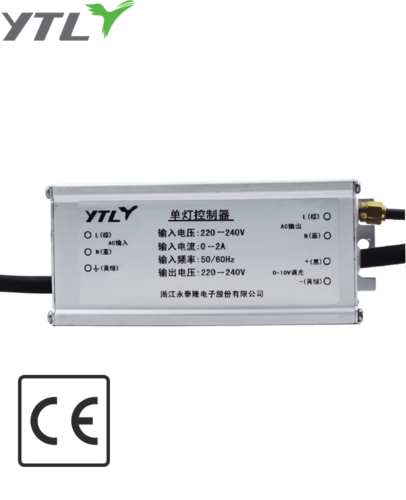
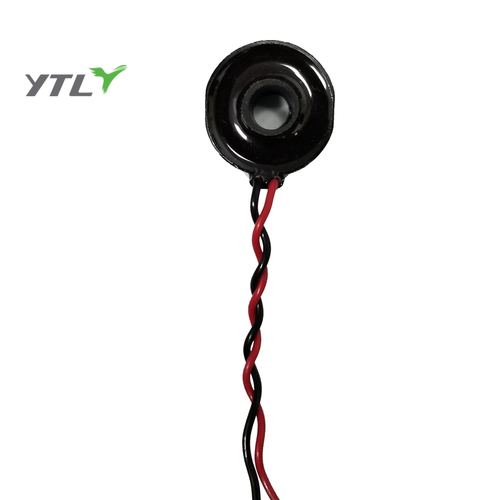
In scenarios such as industrial automation, energy management, and scientific research experiments, CT meters (Current Transformers) serve as core devices for current measurement. Their accuracy directly affects data reliability, system control effectiveness, and even equipment safety. However, the market is flooded with numerous CT meter models and complex parameters. How to select a CT meter that truly meets your needs amid the "parameter confusion"? This article will break down 5 core parameters and combine them with typical application scenarios to help you accurately find a cost-effective solution.
I. Transformation Ratio: The "Range Switch" of CT Meters
Why is the transformation ratio a basic parameter?
A CT meter functions to proportionally reduce the primary side (high current) current to the secondary side (low current) for use by measuring instruments or protection devices. The transformation ratio (N) is the ratio of the primary side current (I?) to the secondary side current (I?) (N=I?/I?), and it determines the "measurement range" of the CT meter.
Misconceptions and correct logic in selection
- Misconception: Assuming a larger transformation ratio is better, and blindly choosing a CT meter with a high transformation ratio.
- Risk: If the actual current is far lower than the designed transformation ratio (e.g., using a 1000:1 CT meter to measure 10A current), the secondary side output current will be too small (only 0.01A), making it vulnerable to noise interference and significantly increasing measurement errors.
Correct logic: Select the transformation ratio based on 1.2-1.5 times the actual load current. For example, if the rated current of a motor is 50A, prioritize CT meters with a transformation ratio of 75:5 or 100:5. This ensures the current falls within the 20%-100% range of the CT meter’s capacity, balancing accuracy and safety.
II. Accuracy Class: The Balance Between Precision and Cost
How are accuracy classes classified?
The accuracy class of a CT meter (e.g., Class 0.1, 0.2, 0.5, 1) indicates its maximum allowable error under rated current. A smaller class number means higher precision, but the price also increases exponentially.
Recommendations for class selection in different scenarios
- High-precision measurement scenarios (e.g., power trading, scientific research experiments):
CT meters of Class 0.1 or 0.2 are required, with an error ≤ ±0.1% or ±0.2%, to ensure data traceability and compliance.
- General industrial control scenarios (e.g., motor protection, energy consumption monitoring):
Class 0.5 or 1 CT meters are sufficient to meet requirements, with an error ≤ ±0.5% or ±1%, balancing cost and reliability.
- Low-cost civilian scenarios (e.g., household photovoltaics, charging piles):
Class 1 CT meters can be used, but note that if they are for electricity fee settlement, they must comply with local metrological regulations (some regions mandate Class 0.5 or higher).
III. Rated Burden: Avoid "A Small Horse Pulling a Big Cart"
What is the rated burden?
The rated burden of a CT meter (unit: VA) refers to the maximum load impedance (including wire resistance and instrument internal resistance) that its secondary side can stably operate with for a long time. If the actual burden exceeds the rated value, the CT meter will experience magnetic saturation, leading to output distortion and a sharp drop in accuracy.
Key points for selection
- Calculate the actual burden:
Actual burden (VA) = Secondary side current squared (I?2) × Total impedance (Z). Here, Z includes wire resistance (R) and instrument input impedance (Z?), i.e., Z = R + Z?.
- Reserve sufficient margin:
It is recommended that the actual burden be ≤ 80% of the rated burden. For example, if a CT meter has a rated burden of 10VA and the actual load of the connected instrument is 6VA, the safety margin is 40%, which prevents overloading caused by temperature rise or wire aging.
IV. Frequency Response: The "Invisible Threshold" for Dynamic Scenarios
Why is frequency response easily overlooked?
Traditional CT meters are designed for 50Hz/60Hz power frequency grids. However, in scenarios such as new energy and variable-frequency drives, the current may contain a large number of harmonics (e.g., 3rd and 5th harmonics from photovoltaic inverter outputs, PWM waveforms from variable-frequency motor outputs). In such cases, the frequency response range of the CT meter directly affects the accuracy of harmonic measurement.
Frequency requirements for typical scenarios
- Power frequency scenarios (e.g., ordinary distribution cabinets):
CT meters with a frequency response of 50Hz ± 0.5% can meet the requirements.
- Harmonic monitoring scenarios (e.g., power quality analysis, photovoltaic grid connection):
Wide-frequency CT meters with a frequency response ≥ 1kHz are required to ensure that harmonic components within the 20th order can be captured.
- High-frequency pulse scenarios (e.g., laser processing, pulse power supplies):
Custom high-frequency CT meters (with a frequency response up to 1MHz or higher) are needed to avoid signal attenuation caused by magnetic core losses.
V. Protection Level and Installation Method: Dual Guarantees for Practicality and Reliability
Protection level (IP code): Adapting to harsh environments
CT meters are often installed in outdoor distribution boxes, motor control cabinets, and other scenarios, requiring dustproof, waterproof, and anti-corrosion capabilities. The IP rating (e.g., IP20, IP54, IP67) is a key indicator:
- IP20: Only protects against solid objects with a diameter ≥ 12.5mm, suitable for indoor dry environments.
- IP54: Dustproof (limited entry) and splash-proof, suitable for general industrial environments.
- IP67: Fully dustproof and can withstand short-term water immersion, suitable for outdoor or humid environments (e.g., sewage treatment plants).
Installation method: Balancing convenience and safety
- Split-core CT meters: Feature a detachable magnetic core design, allowing installation without disconnecting the circuit. Suitable for renovation projects or temporary measurements.
- Solid-core CT meters: Require wire threading during installation but offer better magnetic circuit closure and higher accuracy. Suitable for new construction projects or long-term monitoring.
- Through-hole CT meters: The primary side wire passes directly through the magnetic core hole, eliminating the need for additional wiring. Suitable for measuring small currents (≤ 100A).
Conclusion: The "Golden Rule" for CT Meter Selection
Selecting a CT meter is analogous to "tailoring clothes to fit"—the transformation ratio determines the range, the accuracy class defines precision, the rated burden ensures stability, the frequency response adapts to dynamic scenarios, and the protection level and installation method guarantee reliability. Neglecting any parameter may lead to measurement distortion, equipment damage, or even safety accidents.
When purchasing a CT meter, it is recommended to follow this "three-step method":
- Clarify the application scenario (measurement/protection/monitoring) and core requirements (precision/cost/dynamic response).
- Screen parameter combinations based on the actual current range, load characteristics, and environmental conditions.
- Prioritize well-known brand products certified by CNAS, UL, CE, etc., to ensure quality and after-sales support.
When every CT meter is accurately matched to its intended use, current measurement will no longer be a "vague estimate" but will become a "data cornerstone" driving industrial intelligence and green energy development.
Key Term Explanations (for clarity)
- CT Meter: Short for Current Transformer Meter, a device used to measure high alternating currents by converting them to low, measurable currents.
- CNAS: China National Accreditation Service for Conformity Assessment, a national authority for laboratory and inspection body accreditation.
- UL/CE: International safety certifications (UL for the U.S. market, CE for the European Union market), indicating compliance with regional safety standards.
- PWM Waveform: Pulse-Width Modulation waveform, a common signal form in variable-frequency drives and power electronic devices.
# CT Meter Buying Guide: 5 Core Parameters Determine Your Measurement Accuracy! In scenarios such as industrial automation, energy management, and scientific research experiments, CT meters (Current Transformers) serve as core devices for current measurement. Their accuracy directly affects data reliability, system control effectiveness, and even equipment safety. However, the market is flooded with numerous CT meter models and complex parameters. How to select a CT meter that truly meets your needs amid the "parameter confusion"? This article will break down 5 core parameters and combine them with typical application scenarios to help you accurately find a cost-effective solution. ## I. Transformation Ratio: The "Range Switch" of CT Meters ### Why is the transformation ratio a basic parameter? A CT meter functions to proportionally reduce the primary side (high current) current to the secondary side (low current) for use by measuring instruments or protection devices. The transformation ratio (N) is the ratio of the primary side current (I?) to the secondary side current (I?) (N=I?/I?), and it determines the "measurement range" of the CT meter. ### Misconceptions and correct logic in selection - **Misconception**: Assuming a larger transformation ratio is better, and blindly choosing a CT meter with a high transformation ratio. - **Risk**: If the actual current is far lower than the designed transformation ratio (e.g., using a 1000:1 CT meter to measure 10A current), the secondary side output current will be too small (only 0.01A), making it vulnerable to noise interference and significantly increasing measurement errors. **Correct logic**: Select the transformation ratio based on 1.2-1.5 times the actual load current. For example, if the rated current of a motor is 50A, prioritize CT meters with a transformation ratio of 75:5 or 100:5. This ensures the current falls within the 20%-100% range of the CT meter’s capacity, balancing accuracy and safety. ## II. Accuracy Class: The Balance Between Precision and Cost ### How are accuracy classes classified? The accuracy class of a CT meter (e.g., Class 0.1, 0.2, 0.5, 1) indicates its maximum allowable error under rated current. A smaller class number means higher precision, but the price also increases exponentially. ### Recommendations for class selection in different scenarios - **High-precision measurement scenarios (e.g., power trading, scientific research experiments)**: CT meters of Class 0.1 or 0.2 are required, with an error ≤ ±0.1% or ±0.2%, to ensure data traceability and compliance. - **General industrial control scenarios (e.g., motor protection, energy consumption monitoring)**: Class 0.5 or 1 CT meters are sufficient to meet requirements, with an error ≤ ±0.5% or ±1%, balancing cost and reliability. - **Low-cost civilian scenarios (e.g., household photovoltaics, charging piles)**: Class 1 CT meters can be used, but note that if they are for electricity fee settlement, they must comply with local metrological regulations (some regions mandate Class 0.5 or higher). ## III. Rated Burden: Avoid "A Small Horse Pulling a Big Cart" ### What is the rated burden? The rated burden of a CT meter (unit: VA) refers to the maximum load impedance (including wire resistance and instrument internal resistance) that its secondary side can stably operate with for a long time. If the actual burden exceeds the rated value, the CT meter will experience magnetic saturation, leading to output distortion and a sharp drop in accuracy. ### Key points for selection 1. **Calculate the actual burden**: Actual burden (VA) = Secondary side current squared (I?2) × Total impedance (Z). Here, Z includes wire resistance (R) and instrument input impedance (Z?), i.e., Z = R + Z?. 2. **Reserve sufficient margin**: It is recommended that the actual burden be ≤ 80% of the rated burden. For example, if a CT meter has a rated burden of 10VA and the actual load of the connected instrument is 6VA, the safety margin is 40%, which prevents overloading caused by temperature rise or wire aging. ## IV. Frequency Response: The "Invisible Threshold" for Dynamic Scenarios ### Why is frequency response easily overlooked? Traditional CT meters are designed for 50Hz/60Hz power frequency grids. However, in scenarios such as new energy and variable-frequency drives, the current may contain a large number of harmonics (e.g., 3rd and 5th harmonics from photovoltaic inverter outputs, PWM waveforms from variable-frequency motor outputs). In such cases, the frequency response range of the CT meter directly affects the accuracy of harmonic measurement. ### Frequency requirements for typical scenarios - **Power frequency scenarios (e.g., ordinary distribution cabinets)**: CT meters with a frequency response of 50Hz ± 0.5% can meet the requirements. - **Harmonic monitoring scenarios (e.g., power quality analysis, photovoltaic grid connection)**: Wide-frequency CT meters with a frequency response ≥ 1kHz are required to ensure that harmonic components within the 20th order can be captured. - **High-frequency pulse scenarios (e.g., laser processing, pulse power supplies)**: Custom high-frequency CT meters (with a frequency response up to 1MHz or higher) are needed to avoid signal attenuation caused by magnetic core losses. ## V. Protection Level and Installation Method: Dual Guarantees for Practicality and Reliability ### Protection level (IP code): Adapting to harsh environments CT meters are often installed in outdoor distribution boxes, motor control cabinets, and other scenarios, requiring dustproof, waterproof, and anti-corrosion capabilities. The IP rating (e.g., IP20, IP54, IP67) is a key indicator: - **IP20**: Only protects against solid objects with a diameter ≥ 12.5mm, suitable for indoor dry environments. - **IP54**: Dustproof (limited entry) and splash-proof, suitable for general industrial environments. - **IP67**: Fully dustproof and can withstand short-term water immersion, suitable for outdoor or humid environments (e.g., sewage treatment plants). ### Installation method: Balancing convenience and safety - **Split-core CT meters**: Feature a detachable magnetic core design, allowing installation without disconnecting the circuit. Suitable for renovation projects or temporary measurements. - **Solid-core CT meters**: Require wire threading during installation but offer better magnetic circuit closure and higher accuracy. Suitable for new construction projects or long-term monitoring. - **Through-hole CT meters**: The primary side wire passes directly through the magnetic core hole, eliminating the need for additional wiring. Suitable for measuring small currents (≤ 100A). ## Conclusion: The "Golden Rule" for CT Meter Selection Selecting a CT meter is analogous to "tailoring clothes to fit"—the transformation ratio determines the range, the accuracy class defines precision, the rated burden ensures stability, the frequency response adapts to dynamic scenarios, and the protection level and installation method guarantee reliability. Neglecting any parameter may lead to measurement distortion, equipment damage, or even safety accidents. When purchasing a CT meter, it is recommended to follow this "three-step method": 1. Clarify the application scenario (measurement/protection/monitoring) and core requirements (precision/cost/dynamic response). 2. Screen parameter combinations based on the actual current range, load characteristics, and environmental conditions. 3. Prioritize well-known brand products certified by CNAS, UL, CE, etc., to ensure quality and after-sales support. When every CT meter is accurately matched to its intended use, current measurement will no longer be a "vague estimate" but will become a "data cornerstone" driving industrial intelligence and green energy development. ### Key Term Explanations (for clarity) - **CT Meter**: Short for Current Transformer Meter, a device used to measure high alternating currents by converting them to low, measurable currents. - **CNAS**: China National Accreditation Service for Conformity Assessment, a national authority for laboratory and inspection body accreditation. - **UL/CE**: International safety certifications (UL for the U.S. market, CE for the European Union market), indicating compliance with regional safety standards. - **PWM Waveform**: Pulse-Width Modulation waveform, a common signal form in variable-frequency drives and power electronic devices.# CT Meter Buying Guide: 5 Core Parameters Determine Your Measurement Accuracy! In scenarios such as industrial automation, energy management, and scientific research experiments, CT meters (Current Transformers) serve as core devices for current measurement. Their accuracy directly affects data reliability, system control effectiveness, and even equipment safety. However, the market is flooded with numerous CT meter models and complex parameters. How to select a CT meter that truly meets your needs amid the "parameter confusion"? This article will break down 5 core parameters and combine them with typical application scenarios to help you accurately find a cost-effective solution. ## I. Transformation Ratio: The "Range Switch" of CT Meters ### Why is the transformation ratio a basic parameter? A CT meter functions to proportionally reduce the primary side (high current) current to the secondary side (low current) for use by measuring instruments or protection devices. The transformation ratio (N) is the ratio of the primary side current (I?) to the secondary side current (I?) (N=I?/I?), and it determines the "measurement range" of the CT meter. ### Misconceptions and correct logic in selection - **Misconception**: Assuming a larger transformation ratio is better, and blindly choosing a CT meter with a high transformation ratio. - **Risk**: If the actual current is far lower than the designed transformation ratio (e.g., using a 1000:1 CT meter to measure 10A current), the secondary side output current will be too small (only 0.01A), making it vulnerable to noise interference and significantly increasing measurement errors. **Correct logic**: Select the transformation ratio based on 1.2-1.5 times the actual load current. For example, if the rated current of a motor is 50A, prioritize CT meters with a transformation ratio of 75:5 or 100:5. This ensures the current falls within the 20%-100% range of the CT meter’s capacity, balancing accuracy and safety. ## II. Accuracy Class: The Balance Between Precision and Cost ### How are accuracy classes classified? The accuracy class of a CT meter (e.g., Class 0.1, 0.2, 0.5, 1) indicates its maximum allowable error under rated current. A smaller class number means higher precision, but the price also increases exponentially. ### Recommendations for class selection in different scenarios - **High-precision measurement scenarios (e.g., power trading, scientific research experiments)**: CT meters of Class 0.1 or 0.2 are required, with an error ≤ ±0.1% or ±0.2%, to ensure data traceability and compliance. - **General industrial control scenarios (e.g., motor protection, energy consumption monitoring)**: Class 0.5 or 1 CT meters are sufficient to meet requirements, with an error ≤ ±0.5% or ±1%, balancing cost and reliability. - **Low-cost civilian scenarios (e.g., household photovoltaics, charging piles)**: Class 1 CT meters can be used, but note that if they are for electricity fee settlement, they must comply with local metrological regulations (some regions mandate Class 0.5 or higher). ## III. Rated Burden: Avoid "A Small Horse Pulling a Big Cart" ### What is the rated burden? The rated burden of a CT meter (unit: VA) refers to the maximum load impedance (including wire resistance and instrument internal resistance) that its secondary side can stably operate with for a long time. If the actual burden exceeds the rated value, the CT meter will experience magnetic saturation, leading to output distortion and a sharp drop in accuracy. ### Key points for selection 1. **Calculate the actual burden**: Actual burden (VA) = Secondary side current squared (I?2) × Total impedance (Z). Here, Z includes wire resistance (R) and instrument input impedance (Z?), i.e., Z = R + Z?. 2. **Reserve sufficient margin**: It is recommended that the actual burden be ≤ 80% of the rated burden. For example, if a CT meter has a rated burden of 10VA and the actual load of the connected instrument is 6VA, the safety margin is 40%, which prevents overloading caused by temperature rise or wire aging. ## IV. Frequency Response: The "Invisible Threshold" for Dynamic Scenarios ### Why is frequency response easily overlooked? Traditional CT meters are designed for 50Hz/60Hz power frequency grids. However, in scenarios such as new energy and variable-frequency drives, the current may contain a large number of harmonics (e.g., 3rd and 5th harmonics from photovoltaic inverter outputs, PWM waveforms from variable-frequency motor outputs). In such cases, the frequency response range of the CT meter directly affects the accuracy of harmonic measurement. ### Frequency requirements for typical scenarios - **Power frequency scenarios (e.g., ordinary distribution cabinets)**: CT meters with a frequency response of 50Hz ± 0.5% can meet the requirements. - **Harmonic monitoring scenarios (e.g., power quality analysis, photovoltaic grid connection)**: Wide-frequency CT meters with a frequency response ≥ 1kHz are required to ensure that harmonic components within the 20th order can be captured. - **High-frequency pulse scenarios (e.g., laser processing, pulse power supplies)**: Custom high-frequency CT meters (with a frequency response up to 1MHz or higher) are needed to avoid signal attenuation caused by magnetic core losses. ## V. Protection Level and Installation Method: Dual Guarantees for Practicality and Reliability ### Protection level (IP code): Adapting to harsh environments CT meters are often installed in outdoor distribution boxes, motor control cabinets, and other scenarios, requiring dustproof, waterproof, and anti-corrosion capabilities. The IP rating (e.g., IP20, IP54, IP67) is a key indicator: - **IP20**: Only protects against solid objects with a diameter ≥ 12.5mm, suitable for indoor dry environments. - **IP54**: Dustproof (limited entry) and splash-proof, suitable for general industrial environments. - **IP67**: Fully dustproof and can withstand short-term water immersion, suitable for outdoor or humid environments (e.g., sewage treatment plants). ### Installation method: Balancing convenience and safety - **Split-core CT meters**: Feature a detachable magnetic core design, allowing installation without disconnecting the circuit. Suitable for renovation projects or temporary measurements. - **Solid-core CT meters**: Require wire threading during installation but offer better magnetic circuit closure and higher accuracy. Suitable for new construction projects or long-term monitoring. - **Through-hole CT meters**: The primary side wire passes directly through the magnetic core hole, eliminating the need for additional wiring. Suitable for measuring small currents (≤ 100A). ## Conclusion: The "Golden Rule" for CT Meter Selection Selecting a CT meter is analogous to "tailoring clothes to fit"—the transformation ratio determines the range, the accuracy class defines precision, the rated burden ensures stability, the frequency response adapts to dynamic scenarios, and the protection level and installation method guarantee reliability. Neglecting any parameter may lead to measurement distortion, equipment damage, or even safety accidents. When purchasing a CT meter, it is recommended to follow this "three-step method": 1. Clarify the application scenario (measurement/protection/monitoring) and core requirements (precision/cost/dynamic response). 2. Screen parameter combinations based on the actual current range, load characteristics, and environmental conditions. 3. Prioritize well-known brand products certified by CNAS, UL, CE, etc., to ensure quality and after-sales support. When every CT meter is accurately matched to its intended use, current measurement will no longer be a "vague estimate" but will become a "data cornerstone" driving industrial intelligence and green energy development. ### Key Term Explanations (for clarity) - **CT Meter**: Short for Current Transformer Meter, a device used to measure high alternating currents by converting them to low, measurable currents. - **CNAS**: China National Accreditation Service for Conformity Assessment, a national authority for laboratory and inspection body accreditation. - **UL/CE**: International safety certifications (UL for the U.S. market, CE for the European Union market), indicating compliance with regional safety standards. - **PWM Waveform**: Pulse-Width Modulation waveform, a common signal form in variable-frequency drives and power electronic devices.


 English
 簡體中文
簡體中文


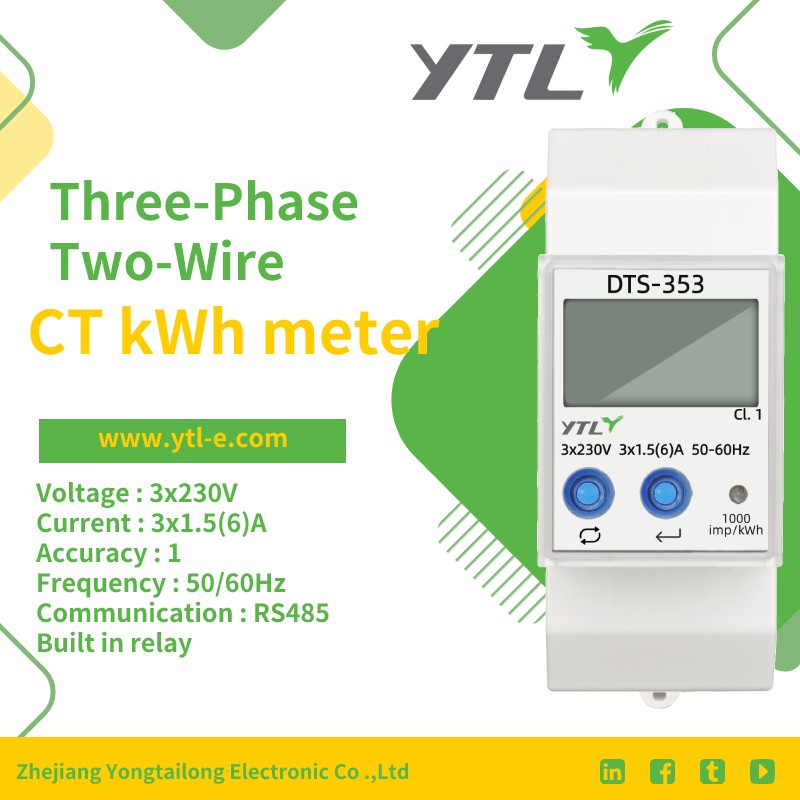

.png?imageView2/2/w/500/h/500/format/png/q/100 "HPLC Smart Light Direct Connected To The Led Driver")